
Atelier B
Project Management | Advisory | Creative Solutions
Blog
5 Steps to Take Before Building Work Begins, and Why They Matter
Before any contractor sets foot on your property, a handful of preparatory steps can save you time, money, and a great deal of stress further down the line. Here's what every client should do before works begin.

1. Put a building contract in place (with a Contract Administrator to administer it)
A formal building contract, properly administered, is one of the biggest protections you have. Make sure you appoint a Contract Administrator to oversee it such as an independent project manager, architect, or building surveyor. Crucially, this should not be your builder. Having the same party build the works and police the contract removes the independent check that protects you if things go wrong and would be a serious conflict of interest.
2. Carry out a thorough photographic condition survey
If you're renovating or extending an existing property, document everything, inside and out, before any works begin. A comprehensive photographic record is invaluable if a dispute arises later over whether damage was pre-existing or caused during the works. Without it, you're relying on memory and goodwill; with it, you have evidence.
3. Get your tender package properly reviewed
Before you sign off a contractor's price, have a suitably experienced person thoroughly review your tender package (drawings, schedule of works, and specification documents). Check that the architectural and structural drawings (and M&E packages, if prepared) are fully coordinated, and that the information is comprehensive enough to cover all necessary works. If the package has been rushed or isn't properly coordinated, build-in a significant contingency on top of the tender figure, otherwise you risk the true cost of the works exceeding what's been priced.
4. Arrange your insurance
Make sure appropriate insurance is in place before works start, covering both the works themselves and your existing property, so you're not exposed during the build.
5. Hold a pre-start meeting
Bring everyone together, you as client, your architect (if still involved), and your builder to talk through the project before work begins. A clear agenda covering the programme, method of work, and everyone's roles ensures the whole team starts from the same page. Get in touch if you'd like a copy of the agenda I use for these meetings.
Anyone Can Call Themselves a Builder. Here's How You Protect Yourself
In the UK, builders don't need a licence to trade. Anyone can set up a construction business and take on your project, and there's no regulatory body checking their competence and financial status before they start work on your home. That makes it entirely down to you to protect yourself, and the two best tools for doing that are having a proper contract in place and an independent person to administer it.

Do your due diligence
Before you appoint anyone, carry out thorough due diligence on your builder. Where possible, consider using a builder who has been vetted by the Federation of Master Builders, whose work has been independently inspected as part of that process. It's one of the few genuine quality checks available in an unregulated industry.
Watch for the red flags
Rogue builders will often ask you to pay upfront, before any work has been carried out. This is a serious red flag, and if you encounter it, you should be vigilant from that point onwards.
As a rule: never pay for work that hasn't been completed. If an element of work is only part-finished, payment should reflect that. For example, if a piece of work is 40% complete, payment for that element should be 40%, not the full amount.
Get your tender properly broken down
Make sure the tender sum is broken down in enough detail to identify the cost of each individual element of work. Without this, it becomes very difficult to know, for example, how much a specific item of work actually costs if you later want to omit it from the contract, leaving you unable to properly negotiate or verify what you're paying for.
The Federation of Master Builders is campaigning for a 'Licence to Build' to be set up in the UK
The Top Trade Body For Builders | FMB, Federation of Master Builders
The FMB connects you to Local Master Builder companies you can trust that have undergone checks including a review of their trading and credit history, proof of public liability insurance, and a rigorous inspection of their work. A builders work continues to be monitored throughout their membership of the FMB to ensure quality, reliability, and trustworthiness.
Don’t Forget The Soft Costs
Beyond construction costs, it is crucial that you remember to allow for the following soft costs. This is often how homeowners fall short and run out of funds. As a rule of thumb typically these can add somewhere between 15-25% on top of the construction costs, and depend on the project’s complexity, the number of consultants involved and the level of finish.

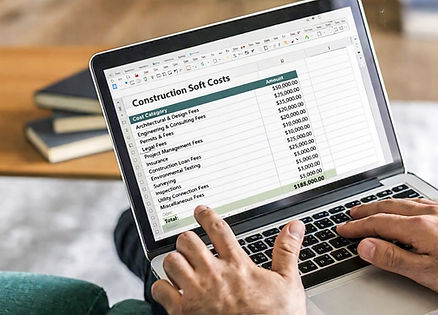
They include :
-
Design and Consulting fees (Architect, Engineer, Project Manager) - typically allow 10–15% of build cost to cover all of these
-
Permits and approvals (Building Regulations fee, planning fees)
-
Surveys (Soil investigation, arboricultural survey)
-
Contingency allowance (10–15%) for unforeseen expenses
-
Landscaping, furnishings, equipment and fit-out
-
Legal and finance fees, and insurance
-
Temporary accommodation
Your Build, Your cover:
Why Insurance Is Now On You
There's a good chance no one has told you this yet: arranging insurance for the works is very likely going to be your job, not your builder's. It's an easy thing to miss. Most homeowners assume their existing buildings insurance automatically covers building work, or that the contractor's own policy has it in hand. In practice, neither is usually true, and the gap between the two is exactly where expensive problems live.

Why this has become the client's responsibility
This isn't a new rule buried in the small print to catch people out, it reflects a genuine shift in how the insurance market treats construction risk. Two things have changed:
Household insurers are increasingly reluctant to cover building work.
Standard buildings policies aren't designed for construction risk, and many simply don't extend to cover a contractor's activity on site, some can even be invalidated if notifiable works start without the insurer being told.
Relying on your builder's own policy has real gaps. A contractor's public liability insurance typically only responds where negligence can be proven. Storm damage, theft, or unexplained loss during the works often fall outside it entirely. And if the works cover sits in the contractor's name only, any claim proceeds are paid to them, not to you.
The market's answer to this has been the rise of a project-specific "all risks" policy, taken out in joint names, covering both the existing structure and the new works together under one insurer. That's a cleaner, more reliable arrangement than trying to stitch together your household cover and your builder's trade policy and it's the practical thing sitting behind the contract clause.
What this looks like in your contract
If you're using a JCT Minor Works contract (the standard form for most residential renovation and extension projects), this is set out at clause 5.5: Joint Names Insurance of the Works and Existing Structure, arranged by the Employer (that's you, the client).
Why this is actually good news for you
It's easy to see this as a further burden on you. Looked at properly, it's the opposite. It hands you more control, not less:
-
You're entitled to the claim proceeds, not your contractor, so if something goes wrong, the money to fix it comes to you, not to them
-
You keep control of the policy for the whole project, including if you change contractor, or if your contractor runs into financial difficulty mid-build
-
You get full "all risks" cover, rather than relying on your contractor to have taken out and paying the premium for, and kept renewing, a policy that's actually adequate.
The trade-off is honest: it does mean more legwork and cost falls to you at the start of the project, rather than being quietly absorbed into your contractor's overheads. But for most clients, that's a fair exchange for genuinely knowing your project and your home are properly covered.
Getting this right at the outset takes very little time compared with untangling it after something's gone wrong mid-build. If you're not sure where you stand on your own project, it's worth a conversation before the first spade goes in the ground.